
Proposed Standard Terminology for Broadhead Geometry and Measurement
Developed By
Eric Newman (PNL Testers)
For Technical Archery Research Group (TARG)
Revision
Rev 1.1
Date
May 2026
1. Scope
This document establishes standardized terminology and measurement definitions related to archery broadheads. The purpose of this standard is to create consistent language for manufacturers, researchers, testers, reviewers, and consumers.
The archery industry frequently uses terms such as “cutting diameter,” “cutting surface,” “blade length,” and “wound channel” inconsistently. This document defines these terms to improve clarity and consistency across testing, product specifications, and technical discussions.
This standard is intended for use with:
- Fixed blade broadheads
- Mechanical broadheads
- Hybrid broadheads
- Single bevel broadheads
- Double bevel broadheads
- Field point style testing systems
2. Purpose and Significance
The purpose of this standard is to establish consistent terminology for broadhead geometry and dimensional measurements.
Standardized terminology allows:
- Consistent comparison between products
- Improved transparency in manufacturer specifications
- Standardized testing procedures
- Better communication between researchers and consumers
- Improved repeatability in testing and reporting
This document does not establish performance requirements. It only defines terminology and measurement methods.
3. General Measurement Guidelines
Unless otherwise specified:
- Measurements shall be taken using calibrated measuring instruments.
- Measurements shall be recorded in inches unless otherwise stated.
- Measurements shall be taken with the broadhead fully assembled.
- Mechanical broadheads shall be measured in both closed and deployed positions when applicable.
- Cutting measurements shall follow the sharpened edge geometry only.
4. Terminology and Definitions
4.1 Broadhead
A projectile point designed for archery applications containing one or more sharpened cutting edges intended for penetration and tissue cutting.
4.2 Fixed Blade Broadhead
A broadhead in which the cutting blades remain fixed and stationary during flight and impact.
4.3 Mechanical Broadhead
A broadhead containing blades that deploy, pivot, slide, or expand during impact.
4.4 Hybrid Broadhead
A broadhead containing both fixed blades and mechanical blades.
4.5 Ferrule
The main structural body of the broadhead that supports and retains the blades.
4.6 Blade
A sharpened cutting component attached to or integrated into the ferrule.
4.7 Main Blade
The primary cutting blade or blades responsible for the majority of tissue cutting.
4.8 Bleeder Blade
A secondary cutting blade intended to increase cutting area or wound channel size.
4.9 Blade Thickness
The measured thickness of an individual blade material, excluding coatings.
Measurement Method:
- Measured perpendicular to the flat surface of the blade.
- Measured at the thickest portion of the sharpened blade material.
4.10 Cutting Diameter
The maximum linear distance measured between the outermost cutting edges of a deployed broadhead.
For symmetrical broadheads, cutting diameter may be determined by measuring the maximum radial distance from the geometric centerline of the broadhead to the outermost sharpened cutting edge and multiplying the measurement by two.
Measurement Method:
- Measured perpendicular to the direction of arrow travel.
- For mechanical broadheads, measured with blades fully deployed.
- For fixed blade broadheads, measured at the widest cutting point.
Note: Cutting diameter represents the maximum geometric cutting width of the broadhead.
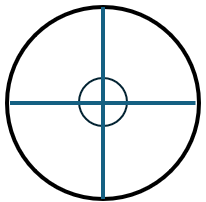
Figures 1 through 3 illustrate generalized broadhead geometries intended to conceptually demonstrate cutting-diameter and total-cutting-surface measurement methods.
Figures are intended for conceptual illustration only and do not represent specific product geometries.
Figure 1 — Two Blade Broadhead Geometry
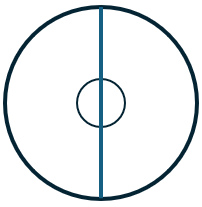
Figure 2 — Three Blade Broadhead Geometry
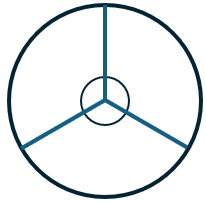
Figure 3 — Four Blade Broadhead Geometry
4.11 Total Cutting Surface
The combined total length of all sharpened cutting edges on the broadhead.
Measurement Method:
- Measured along the sharpened edge geometry.
- All sharpened blade edges shall be summed together.
- Serrated sections shall follow the sharpened edge contour.
Note: Total cutting surface is not the same as cutting diameter.
4.12 Blade Length
The linear distance from the forward-most sharpened point of the blade to the rear-most sharpened point of the blade.
4.13 Exposed Blade Length
The portion of sharpened blade exposed beyond the ferrule when in the closed or undeployed position.
4.14 Ferrule Length
The total linear length of the ferrule excluding blades.
4.15 Ferrule Diameter
The maximum outside diameter of the ferrule body.
4.16 Tip
The forward-most penetrating point of the broadhead.
4.17 Tip Length
The linear distance from the forward-most point of the broadhead tip to the beginning of the primary cutting edge.
4.18 Single Bevel
A blade sharpened on one side only, producing an asymmetrical edge geometry.
4.19 Double Bevel
A blade sharpened symmetrically on both sides of the blade.
4.20 Blade Deployment
The motion or transition of a mechanical blade from closed position to deployed position.
4.21 Closed Position
The undeployed configuration of a mechanical broadhead during storage or flight.
4.22 Deployed Position
The fully expanded configuration of a mechanical broadhead during impact.
4.23 Leading Edge Angle
The angle formed between the cutting edge and the direction of arrow travel.
4.24 Included Edge Angle
The total angle formed between opposing sharpened surfaces at the blade edge.
4.25 Wound Channel
The physical cavity or tissue displacement created during penetration.
Note: Wound channel size may differ from cutting diameter depending on penetration angle, tissue elasticity, blade orientation, and broadhead dynamics.
5. Notes on Manufacturer Terminology
Manufacturers may use varying terminology including:
- Cutting width
- Cut size
- Cutting surface
- Wound channel
- Entry diameter
- Slice diameter
These terms are frequently used inconsistently throughout the archery industry.
This standard recommends use of the specific definitions contained within this document.
6. Recommended Reporting Format
When reporting broadhead specifications, the following categories are recommended:
- Broadhead type
- Number of blades
- Blade thickness
- Cutting diameter
- Total cutting surface
- Blade length
- Ferrule length
- Ferrule diameter
- Weight
- Blade material
- Ferrule material
- Bevel type
7. Future Standards Integration
This terminology standard is intended to support future standards related to:
- Broadhead classification
- Penetration testing
- Edge sharpness testing
- Mechanical deployment testing
- Durability testing
- Aerodynamic testing
- Structural testing
8. Conclusion
The archery industry currently lacks standardized terminology related to broadhead geometry and dimensional measurements. This document establishes a consistent framework intended to improve communication, testing repeatability, and specification clarity.
The use of standardized terminology allows researchers, manufacturers, reviewers, and consumers to communicate using clearly defined measurement methods and definitions.